Frankenstein Unbound – 1990, Italy/US, 85m. Director: Roger Corman.
Lady in White – 1988, US, 113m. Director: Frank LaLoggia.
Nightbeast – 1982, US, 81m. Director: Don Dohler.
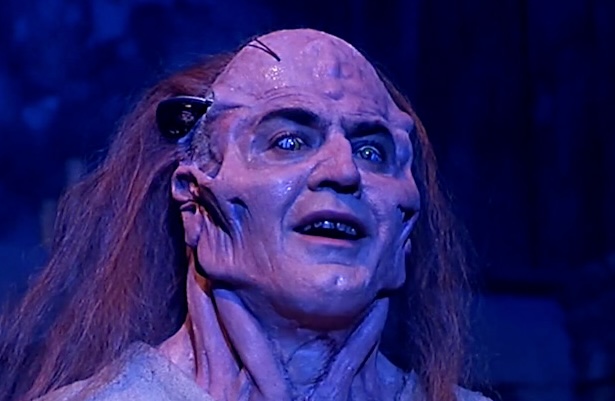
FRANKENSTEIN UNBOUND (1990) A ridiculous interpretation of the Mary Shelley novel (based on a 1973 paperback) that involves everything from time travel to futuristic talking cars. Scientist John Hurt is zapped from 2031 Los Angeles to 1817 Switzerland where he meets Shelley (a miscast Bridget Fonda) just when she’s about to write her masterpiece, Frankenstein, or the Post Modern Prometheus—a novel based on the real Dr. Frankenstein (Raul Julia) and his monstrous creation (Nick Brimble). Naturally, the monster is just misunderstood and resents Dr. F for having created him, but that doesn’t stop Brimble from ripping people to pieces whenever he feels threatened, particularly in a scene where the monster is confronted by an angry mob. The monster threatens Frankenstein with more violence unless he’s given a female companion, something Frankenstein does begrudgingly before Hurt (who despises what Frankenstein represents) sends them through time with his computer-age tech. Julia and Hurt are good, but the story is mostly preposterous, and the monster’s makeup more distracting than effective—something that would be handled much better in the bloated 1994 Kenneth Branagh-directed version. Even Hammer’s splatter-strewn Frankenstein and the Monster from Hell (1974) has more soul than this empty vehicle. C–
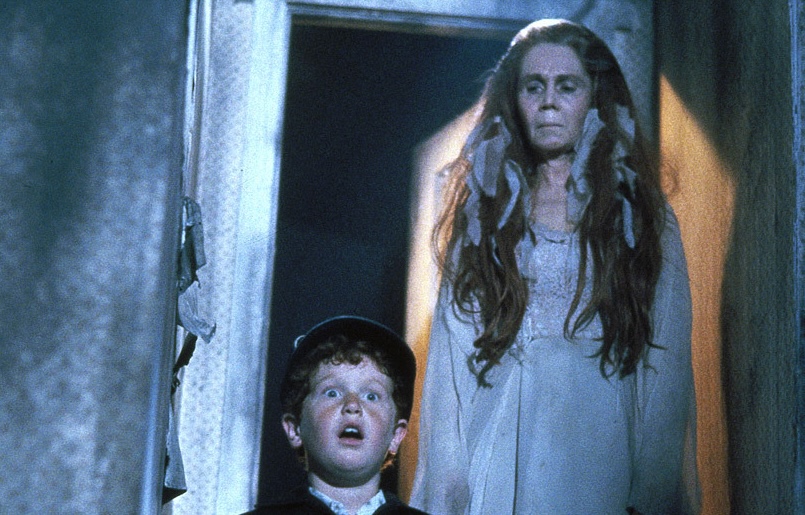
LADY IN WHITE (1988) A well-done mystery in which horror writer Frankie Scarlatti recalls how in 1962 he saw a ghost and subsequently became embroiled in the activities of a child murderer. Witness‘s Lukas Haas plays young Frankie, a sweet-natured kid who’s locked in a school’s closet over Halloween night and sees the decades-old murder of a little girl reenacted by the spirit of the victim. As events unfold, Frankie believes he can identify the killer—and that he’s being watched over by an enigmatic (and possibly ghostly) woman in white (Katherine Helmond)—putting his life in danger. Haas is good, and the script, while often melodramatic, is effective, with an old fashioned storytelling narrative—a fact that may have led to the film’s failure to find an audience during the height of more FX-fueled fair like the Nightmare on Elm Street movies. A thoughtful, character-driven chiller. B
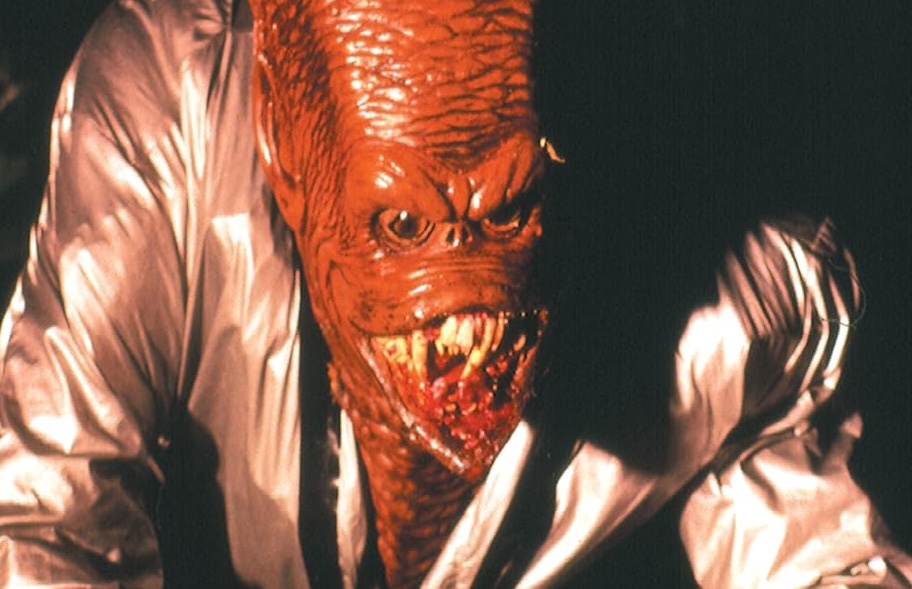
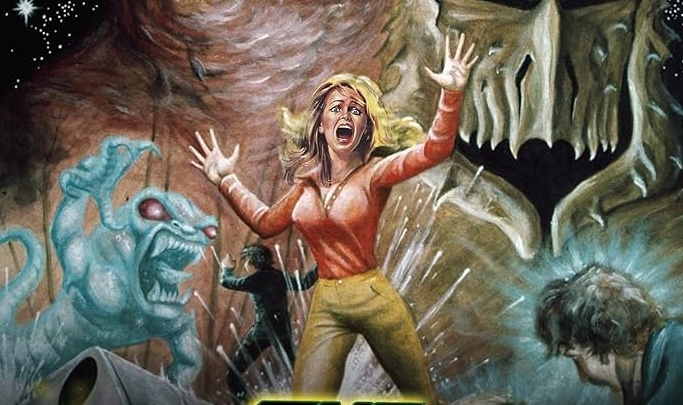
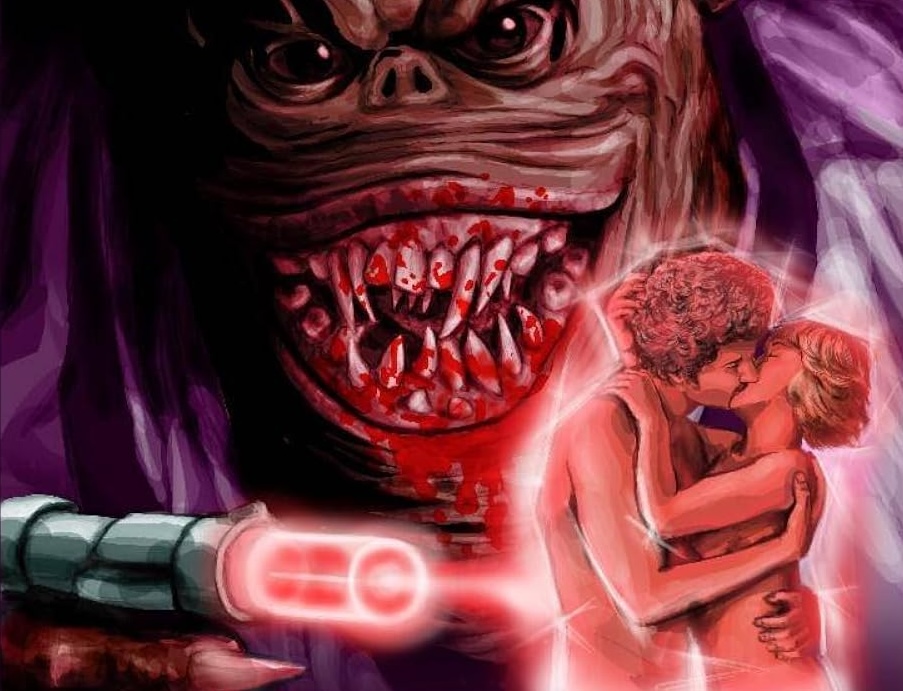
NIGHTBEAST (1982) A vicious alien crash-lands in the boonies and goes on a killing spree. A trio of flannel shirt-wearing bumpkins are vaporized by the alien’s ray gun, followed by a man getting his eye gouged out after he pulls over to take a leak. Another has his intestines ripped out right before a couple of kids are ray-gunned. And all of this is within the first fifteen minutes! After a failed gun battle with the extraterrestrial, the police accept their loses—which includes most of their deputies—and go back to the station for a cup of coffee before recruiting more good ol’ boys with shotguns. An obvious lack of finances keeps the majority of the action in the woods, including a brawl between the hero and a beer-guzzling hick. Most of the townsfolk are wiped out by the beast, leaving the sheriff and his deputy girlfriend—the two have a protracted and howlingly awful love scene—in charge of trying to destroy the creature with electricity. Like the acting and special effects, the production as a whole is strictly amateur, although one can appreciate the amount of care that went into the film no matter how bare-bones it may seem. It’s all sophomoric and dumb, but entertaining nonetheless. Lost‘s J.J. Abrams co-wrote Nightbeast‘s musical score when he was a teenager. B–