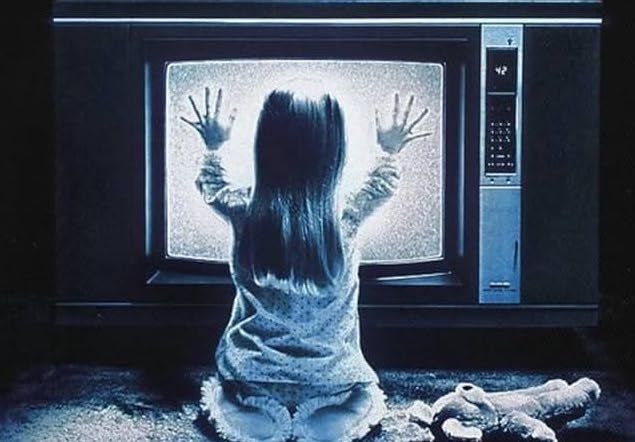
POLTERGEIST (1982) The Freeling family are living a blissful existence until their California tract home is invaded by malevolent spirits, turning their American dream into a nightmare. In a clever twist, the ghosts use the family’s television sets to enter the world of the living, snatching their youngest child, Carol Anne (Heather O’Rourke), and releasing a hideous barrage of incidents involving monstrous tree demons, spectral hell hounds, and a devilish clown doll. The desperate parents (JoBeth Williams and Craig T. Nelson) enlist the help of a parapsychologist (Beatrice Straight) and her team of paranormal investigators, forming a template for the modern haunted house movie that would be replicated for decades to come. The relatively simple premise is elevated thanks to elegant direction by Tobe Hooper—no doubt under the close supervision of producer Steven Spielberg—and the use of fantastic special effects, many of which still pack a wallop. But Poltergeist‘s real strength lies in its characters, all of whom are sympathetic and grounded in reality, making the horror that’s happening to them all the more suspenseful. An excellent cast gives it their all, but it’s Zelda Rubinstein who steals the show in a memorable turn as psychic Tangina. “This house is clean.” A (Currently not streaming.)
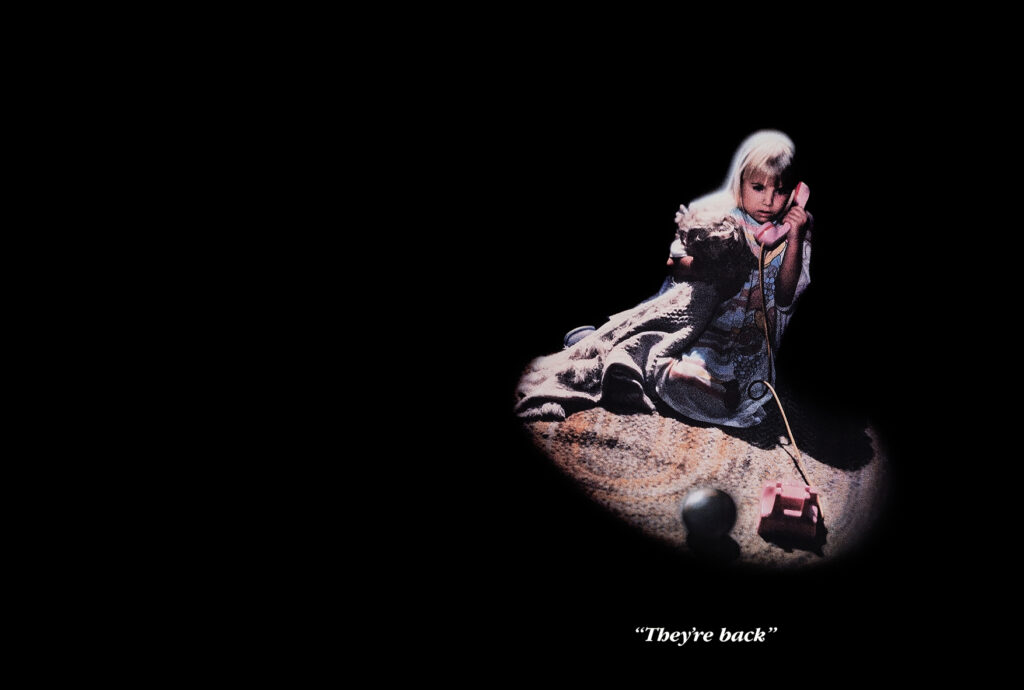
POLTERGEIST II: THE OTHER SIDE (1986) Many fans find this sequel to Tobe Hooper’s Poltergeist disappointing. I don’t. Yes, it lacks the original’s story structure and characterization, but Poltergeist II: The Other Side is extremely well made and has plenty to offer. The year after the events in the first film has displaced the Freeling family—their house was sucked into another dimension—and they’ve taken up residence with Diane’s (JoBeth Williams) psychic mother (Geraldine Fitzgerald). The peace and quiet of life anew is interrupted by the arrival of a malicious entity known as Reverend Kane (Julian Beck), a 19th century doomsday preacher who killed his followers by burying them alive in an underground cavern. As shown in the opening credits, Kane’s skeletal remains still reside in the cave, which is located directly under the Freeling’s old swimming pool. Since Zelda Rubinstein’s participation as Tangina is sparse, the Freelings place their trust in Native American medicine man Taylor (Will Sampson), who teaches Steve Freeling (Craig T. Nelson) how to protect his family from Kane’s onslaught of ghostly activity—the most impressive being a grotesque semi-humanoid creature regurgitated by Steve (initially designed by H.R. Giger). The writers throw logic out the window by having every female member of the Freeling family being clairvoyant (a slick way of delivering plot exposition), and creating a ridiculously contrived climax taking place on the “other side.” Yet Poltergeist II is a lot of fun and manages to overcome most of its problems thanks to good acting, faithful character arcs, and some powerhouse special FX sequences that rival anything in the first movie. B (Currently streaming on Cinemax via Prime.)
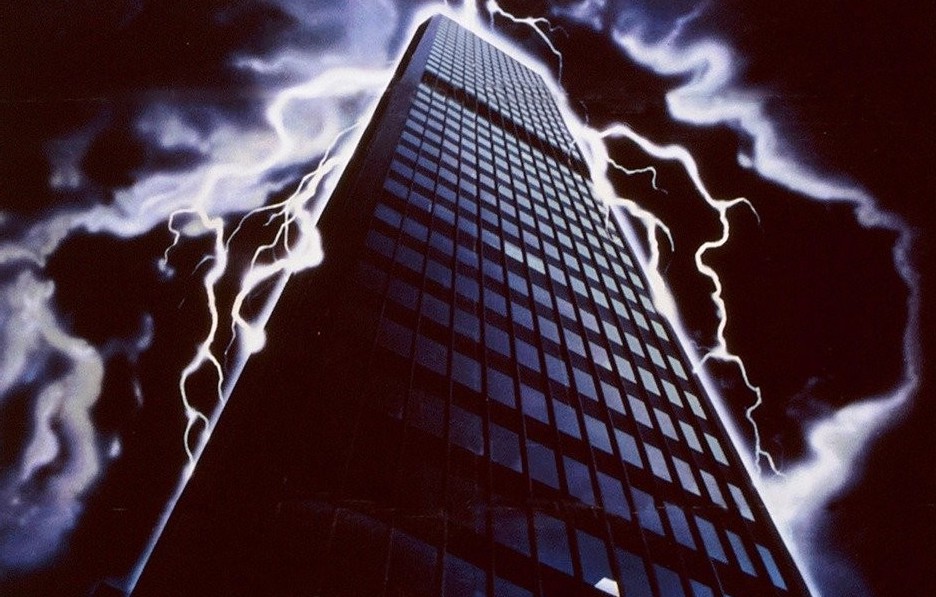
POLTERGEIST III (1988) After battling otherworldly creatures twice before, little Carol Anne Freeling (Heather O’Rourke) is once again stricken with a bad case of ghostitis. Now attending a school for gifted children in Chicago while living with relatives, Carol Anne is pulled into another ghostly nightmare by Reverend Kane—who’s inexplicably returned after having been banished to Hell at the end of Poltergeist II. Kane (Nathan Davis) can enter our world through the use of mirrors and reflective surfaces, which conveniently cover the walls of Carol Anne’s new home in a posh high-rise managed by her Aunt Pat (Nancy Allen) and Uncle Bruce (Tom Skerritt). In a repeat of the first film, Carol Anne is snatched by Kane and taken to the spirit dimension—where Pat and Bruce must go in order to save the young girl. Kane also abducts Carol Anne’s cousin (Lara Flynn Boyle), who returns from the other side as a murderous demon that gives Carol Anne’s disbelieving psychiatrist (Richard Fire) a taste of his own medicine. Tangina (Zelda Rubinstein) senses danger but has less to do here than she did in the previous movies. Kane continues to step up his game by creating the world’s first Demonic Car Crash Derby in the building’s underground parking garage in a scene that’s both ridiculous and spectacular. Pat keeps referring to Carol Anne as a “little brat” and losing sympathy votes with the viewer, while Joe Renzetti’s themeless keyboard musical score makes one miss Jerry Goldsmith’s memorable orchestral work from the original. But I’m carping. Poltergeist III is actually a fairly entertaining film filled with inventive and complex FX work. One of the smartest moments in any of the three movies happens here when Tangina realizes she’s just as capable as Carol Anne of giving Kane what he seeks. The makeup effects were supervised by Dick Smith. B– (Currently streaming on Cinemax via Prime.)